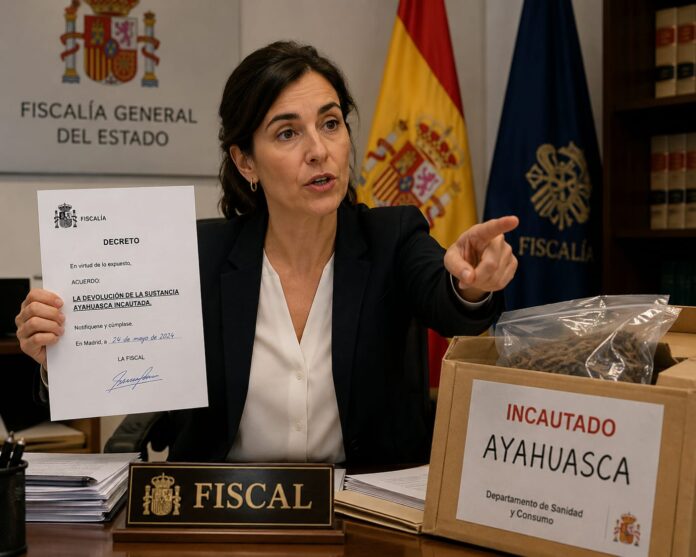






Attached is the sentence of the Superior Court of Justice of Madrid in which a paragraph is dedicated to a call of attention of the judges on the excesses that Maria Antonia had in the trial to which she was called as an expert witness in Madrid for a trial on ayahuasca in which she stated that ayahuasca was illegal because it contained DMT which is false since the international conventions of the INCB clarify that only the synthetic DMT is illegal while the natural DMT of ayahuasca is not, nor ayahuasca as such as a whole, Besides, the human being contains endogenous DMT in his body and we are not illegal because of it. We consider that it is important that you have clarity about this because the viciousness with which you acted in the trial was not from a neutral position but rather it seemed that you wanted the accused citizen who was found innocent to go to jail, a very serious attitude because of the implications it can have for the life of a person. We consider that the attitude she had was quite toxic and poisonous in spite of being a supposed expert in toxics. Making up something to accuse a person of going to jail is serious and could even be grounds for removal from office. We are in contact with many associations defending the rights of ayahuasca users who have told us to take legal action, but we prefer not to do so and send this email because we trust that Mrs. Antonia will come to her senses without the need to do so and from now on tell the truth about ayahuasca.
The Provincial Court confirmed that ayahuasca is not illegal, the prosecutor appealed based on Antonia's false report and the Superior Court of Justice ratified the sentence and wrote this paragraph dedicated to Antonia:
«The Public Prosecutor's Office invokes the opinion given in the plenary session by the expert of the National Institute of Toxicology, which concludes that this substance is controlled.
This approach cannot be categorically followed. Without questioning the qualifications of the National Institute of Toxicology, and the solvency of its reports, it is not its responsibility to establish which substances are controlled, a legal consideration, since its competencies as a technical body are those of assisting the Administration of Justice and contributing to the unity of scientific criteria, to the quality of analytical expertise and to the
development of forensic sciences, through the issuance of reports and
toxicological analyses and investigations, and the practice of toxicological analyses and investigations.
entrusted, through research processes».»
Furthermore, in the same sentence she is confronted for inventing supposed official reports that say which quantities of ayahuasca can be considered for self-consumption and which for distribution or «trafficking» when there are no such reports and it is as legal in Spain to consume ayahuasca as to facilitate or distribute it. since the court cases where facilitators or psychologists who distributed ayahuasca in therapeutic retreats have been tried have been acquitted or the cases have been archived and there is not a single conviction in Spain for any type of use given to ayahuasca either for self-consumption or facilitation to other people. The sentence tells Antonia in this regard:
«There is, moreover, no jurisprudential precedent that would endorse the
conclusions submitted motu proprio motu by the Institute in connection with the
minimum psychoactive dose, daily consumption dose, etc., which is said to have been issued in accordance with the parameters of the previous opinion issued on October 18, 2001 and which resulted in the Agreement of the Plenary of the Second Chamber of the Supreme Court of October 19, 2001″.
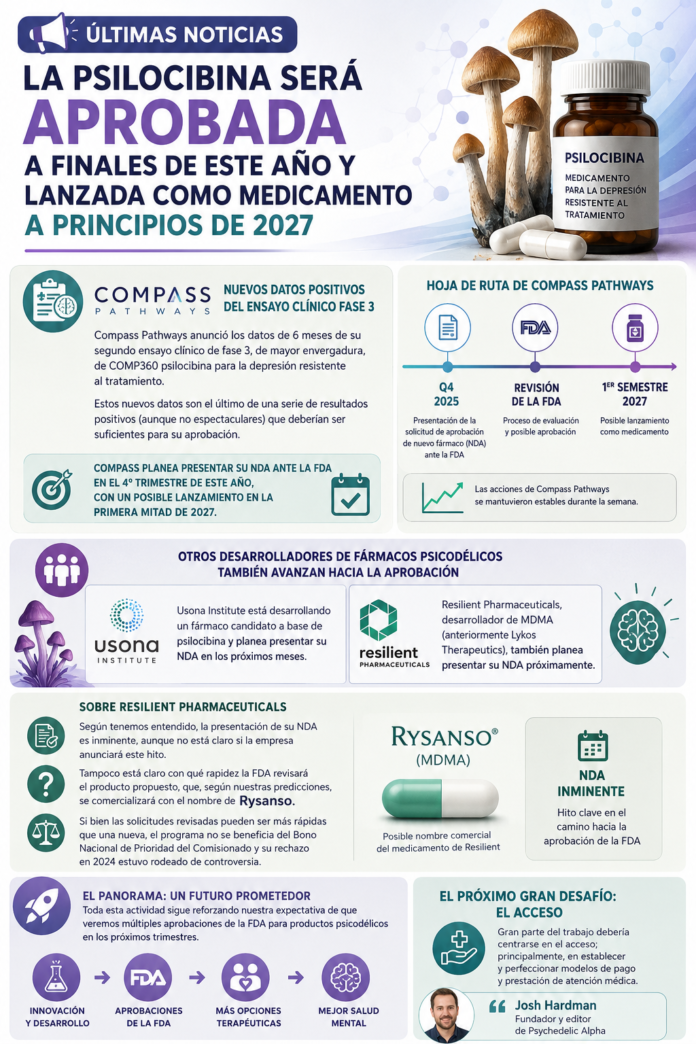
The sentence also clarifies that according to the INCB only three plants are illegal: opium poppy, marijuana and coca leaf. Ayahuasca is not illegal even if it contains Dmt, San Pedro and peyote are not illegal even if they contain mescaline and psilocybin mushrooms are not illegal even if they contain psilocybin because they are only illegal in their synthetic form. The bufo alvarius is not illegal either, not even the synthetic 5meodmt. In fact they are doing clinical trials that are finishing phase III with psilocybin to treat depression, also with 5meodmt they are in phase III and with the same DMT also in phase II. In a few years they will be prescription drugs, psilocybin probably already next year thanks to the company Compass Pathways. In fact, the European Union itself has granted 6.5 million euros to the project.
The High Court of Justice's ruling also hits the Spanish Medicines Agency, which in a report by one of its officials named Lidia Fernandez Matellanos falsely stated that ayahuasca was not legal in Spain. In this report she also falsely stated that it is toxic without providing any scientific evidence other than that of her prejudice and denying the clinical trials for more than 20 years by Dr. Jordi Riba at the Hospital de Sant Pau in Barcelona which showed that ayahuasca is not toxic, is cardiovascular safe and does not produce addiction by not activating the reward circuits of the brain as well as having immense therapeutic potential for many mental health conditions. It does not even destroy neurons but promotes neurogenesis by stimulating the neurogenic niches of the hippocampus and ventricle responsible for generating new neurons in the brain as demonstrated by Dr. Morales at the Complutense University of Madrid:
https://www.ucm.es/otri/noticias-un-te-amazonico-fomenta-la-formacion-de-nuevas-neuronas
Even the National Police Inspector Marcos Quinteiro Lopez of the Vigo Police Station has spoken publicly on many occasions about the benefits of ayahuasca and has clarified that it is not illegal as expressed in this podcast where he recommends taking ayahuasca to police officers who have depression or trauma from acts of service and where he cries for 21 colleagues who committed suicide and to whom he feels that ayahuasca could have helped: https://youtu.be/SzsTpc7ATRk?si=51rb-yLe38gaNPzr
I attach here the scientific demonstrations of why ayahuasca is neither toxic nor addictive and that it has never produced a death that was directly caused by ayahuasca.
DOCTORS SCIENTIFICALLY ANSWER TYPICAL QUESTIONS ABOUT AYAHUASCA
-IS AYAHUASCA TOXIC?
«Ayahuasca does not produce organic or cerebral toxicity. Regarding the effects of ayahuasca on the organism, studies have shown that
studies with volunteers, both in laboratory conditions (Jordi Riba, 2003; dos Santos, 2011) and in natural contexts (McKenna, 2004), show that ayahuasca is physiologically quite safe. The impact of ayahuasca on the cardiovascular system is minimal, producing slight increases in blood pressure and blood pressure without clinical implications.
heart rate (Riba et al., 2001, 2003; dos Santos et al., 2012).
In studies in which general blood tests have been performed before and after the participation of volunteers in clinical trials, no alterations of any kind in hematological functions have been found.
and biochemical (Riba et al., 2001; Riba and Barbanoj, 2005). In a recent study in which liver function was evaluated in regular ayahuasca users (twice a month or more),
for at least one year) no alterations in liver function or liver markers were found.
(Mello et al., 2019).
- IS AYAHUASCA ADDICTIVE?
«As for its abuse potential, neuroimaging studies with healthy volunteers have observed that ayahuasca does not activate brain areas related to the brain's reward systems, which are the brain centers that activate drugs with abuse potential.
abuse such as methamphetamine, cocaine or alcohol. Moreover, in this sense, existing evidence suggests that ayahuasca may represent a useful tool in the treatment of addictions (Bouso and Riba, 2014).
- CAN IT CAUSE OVERDOSE?
«It has also been shown in clinical trials that ayahuasca does not produce tolerance (dos Santos et al., 2012), so it is not necessary to increase doses to achieve the desired effects, something that, added, as mentioned above, to the emetic effects (vomiting), protects users from overdosing.»
- ARE THERE DETOXIFICATION AND ADDICTION TREATMENT CLINICS THAT USE AYAHUASCA AS MEDICINE?
«In fact, there are several clinics in South America specialized in the treatment of drug addiction using ayahuasca, the best known of which is Takiwasi, in Peru (Mabit, 2007).
A recent study conducted with patients with major depression did find that ayahuasca activates a brain area involved in reward mechanisms called nucleus accumbens (Sanches et al., 2016), an effect that, according to the authors of the study, is unique to patients with depression and helps to explain the antidepressant effect of ayahuasca in patients with major depression . One of the first studies conducted in humans evidenced how many participants in ayahuasca ritual sessions had abandoned the
consumption of alcohol and other drugs, such as cocaine, as a consequence of their participation in rituals (Grob et al., 1996). A study with a very large sample, in which 127 ayahuasca users in traditional contexts were evaluated and compared with 115 controls, found no evidence of addiction criteria according to the biopsychosocial indicators evaluated with the ASI scale (ASI severity index).
addiction; the standard scale for assessing drug addiction), nor did it find that the continued use of ayahuasca was associated with the harmful biopsychosocial effects of the drugs.
drugs of abuse. Moreover, the ayahuasca user groups consumed less alcohol and other drugs than the control subjects and these better scores on the biopsychosocial indicators
The results were replicated one year later, confirming the consistency of the results (Fábregas et al., 2010).
In recent years, several studies, both biomedical and ethnographic, have been published evaluating the anti-addictive properties of ayahuasca. One study evaluated the efficacy of an
program in Peru using traditional Amazonian medicine, including ayahuasca, with patients dependent on multiple substances (mainly cannabis, alcohol and cocaine), and
found a significant decrease in indicators of addiction severity and an increase in quality of life (Berlowitz et al., 2019). Another study found a lower incidence
of alcohol and tobacco abuse disorders among religious ayahuasca users compared to the general population (Barbosa et al., 2018). In an international survey of
In a survey of 96,901 users of different drugs, users of ayahuasca (500 people) consumed less alcohol than users of other psychedelics (such as LSD or
psilocybin) and reported having the best quality of life of the entire sample (Lawn et al., 2017). Other recent studies showed evidence of efficacy in the treatment of drug dependence in
different cultural populations and treatment settings (Fernandez et al., 2015; Loizaga Velder and Verres, 2014; Thomas et al., 2013). Two recent ethnographic studies focused on
study the anti-addictive properties of ayahuasca also found recovery processes in subjects as a consequence of participation in ayahuasca ceremonies (Talin and Sanabria, 2017; Apud and Romaní, 2017).»
- DOES AYAHUASCA SERVE TO PREVENT THE DEVELOPMENT OF ADDICTIONS IN ADULT LIFE?
«One study, conducted with adolescents also found that they consumed significantly less alcohol than control subjects, concluding that ayahuasca, far from producing abuse or dependence, for these adolescents constituted a protective factor against alcohol consumption....
(Doering-Silveira et al., 2005a).»
- WHY AYAHUASCA EXPERIENCES CAN OPTIMIZE OUR MENTAL HEALTH? CAN IT BE USED AS A SELF-CARE TOOL LIKE DOING SPORTS OR MEDITATION?
«The therapeutic properties of ayahuasca are probably due to a combination of its psychoactive effect - and the associated subjective experiences - with its pharmacological actions. It activates the brain areas related to the memory of events.
(called episodic memory) and with the awareness of emotions and internal sensations (Riba et al., 2006; de Araujo et al., 2011). From a psychological perspective, several recent studies showed that the psychotherapeutic potentials of ayahuasca could be related to its ability to increase what in clinical psychology is called «decentering» (Franquesa et al., 2018; Soler et al., 2016), or the ability to observe thoughts and emotions as transient events of the mind without being trapped by them,
as well as enhancing mindfulness skills and cognitive flexibility (Murphy-Beiner and Soar,
2020; Sampedro et al., 2017; Soler et al., 2018). Such processes are considered important in clinical psychology, as they are estimated to be responsible for -and therefore explain- the
psychotherapeutic results.
If ayahuasca has no recreational or abuse potential, there must be other reasons why people use it. Personality studies carried out with populations
Brazilian and Spanish ayahuasca users have not been found to achieve higher scores on a scale known as «novelty seeking» (Grob et al., 1996);
Bouso et al., 2012; Bouso et al., 2015), which is a personality trait that drug abusers tend to score high on. However, users do score higher on this trait than users of drugs of abuse.
elevated than the non-user population in another personality trait referred to as «self-transcendence» (Bouso et al., 2012; Bouso et al., 2015), which is the tendency to harbor an
transcendent concept of life, not necessarily linked to any religious affiliation. These personality studies have found, on the whole, that individuals who use
ayahuasca do so for reasons that have to do with personal development, the search for psychological well-being and a better adaptation to the world. In fact, in these studies it has been detected that they are perfectly adapted and integrated in their social environment,
The results are similar to those obtained by people who practice meditation or other techniques for personal and spiritual improvement, and are similar to those obtained by people who use ayahuasca as a tool for personal and spiritual improvement.
development and personal well-being (Soler et al., 2016; Palhano-Fontes, 2015).
-WHAT PSYCHOLOGICAL DISORDERS
AND MENTAL ILLNESS
CAN HELP TO HEAL?
«There are a few studies that have explored the psychotherapeutic potential of ayahuasca in clinical populations. The strongest evidence has been shown in patients with major depression.
resistant to treatment. A recent study reported antidepressant effects of ayahuasca in patients with major depression, effects that were maintained for 21 days after administration of a single dose (Osório et al., 2015; Sanches et al., 2016). This therapeutic effect was associated with brain changes measured with neuroimaging techniques, thus providing an objective demonstration of therapeutic change (Sanches et al., 2016). Another
The most recent study confirmed the antidepressant effect of a single dose of ayahuasca in a placebo-controlled clinical trial (Palhano-Fontes et al., 2017). That clinical trial also found a decrease in suicidal ideation in the ayahuasca group compared to the one taking placebo (Zeifman et al., 2019), a result that has also been found in another open-label study (Zeifman et al., 2020). Cortisol was also assessed-which.
can be considered a biological marker for the reduction of depression and suicidal ideation, showing levels similar to those of normal subjects after ayahuasca treatment.
(Galvão et al., 2018). Ayahuasca also increases the levels of neurotrophic factors (mainly brain-derived neurotrophic factor, or BDNF), which are associated with
neuroplasticity and antidepressant effects, among others (de Almeida et al., 2019).
The psychotherapeutic potential of ayahuasca for the treatment of other psychological disorders has also been investigated. Two studies have shown consistently positive results in
to evaluate the use of ayahuasca in bereavement therapy (González et al., 2019, 2020). In addition, one of them reflected that these beneficial effects were maintained after one year of follow-up
(Gonzalez et al., 2020). Likewise, positive results have been found in two preliminary studies in patients with eating disorders (Lafrance et al., 2017; Renelli et al., 2018).
Although research on the therapeutic effects of ayahuasca is still in its infancy, several authors propose that this concoction could also be useful.
for the treatment of post-traumatic stress disorder (PTSD) (Nielson and Megler, 2013) and personality disorders (Domínguez-Clavé et al., 2019), as well as for the treatment of the
antisocial behavior, among other disorders characteristic of our civilization (Frecksa et al., 2016), including the improvement of symptomatology in some serious physical conditions, such as the
amyotrophic lateral sclerosis (ALS) (ALSUntangled Group, 2017).»
ARE THERE ANY SIDE EFFECTS?
The main side effect induced by ayahuasca is nausea and vomiting (Callaway et al., 1999; Riba et al., 2001; Riba, 2003; Riba and Barbanoj, 2005; dos Santos, 2011; dos Santos et al., 2012).
The action of ayahuasca on vomiting is due, firstly, to the particular organoleptic properties of the drink and, secondly, to its serotonergic action (Callaway et al.,
1999). In any case, this is not an adverse reaction considered to be of importance by the participants in the sessions, but rather it is seen as a potential effect.
therapeutic method called «la purga» in traditional Amazonian medicines (Luna, 1986, 2011), or «cleansing» in the context of Brazilian ayahuasca religions (Labate, 2004).
Purge«, in traditional usage contexts, is understood as a physical cleansing of the body.
and psychological resolution of internal conflicts that may afflict the participant and is considered an essential part of the therapeutic benefits (Luna, 1986, 2011). The emetic effects of ayahuasca, in fact, constitute one of the main reasons why ayahuasca does not have a potential recreational use.
Finally, two recently published studies have evaluated the adverse effect profile of ayahuasca in naturalistic settings. First, Durante et al. (2020) reported that
the most frequent adverse effects in a sample of 614 people consisted of gastrointestinal symptoms, as noted above. However, despite being considered as adverse events from the medical point of view, these effects are actually desired by users, who consider this process as a necessary purging.
Surprisingly, the use of prescription medication or having a history of psychiatric diagnosis were not associated with suffering more adverse events. There was also a
higher frequency of adverse effects such as tachycardia, dizziness or tremors in the subsample (of fifty people) who had a psychiatric diagnosis (mainly,
depression and anxiety).
The study published by Gómez-Sousa et al. (2021), which focused on acute adverse reactions recorded in a ceremonial context and in individuals taking
ayahuasca for the first time, found a total of seven cases in a sample of forty people (17.5%). Four of the seven subjects fulfilled psychiatric diagnostic criteria before
of resorting to ayahuasca intake. The authors highlighted the fact that, even after having suffered acute adverse events, the subjects did not develop psychiatric symptoms nor
experienced long-term consequences. On the contrary, positive effects were recorded, such as reduced criteria for the diagnosis of psychiatric disorders (Gómez-Sousa et al.,
2021). There have also been studies of medium and long term effects in which no neuropsychological or psychopathological alterations derived from the continued consumption of ayahuasca have been evidenced. A prospective study conducted with people who took the concoction for the first time found improvements in measures of mental health and reduction of physical pain six months after taking ayahuasca.
after initiating the ritual consumption of ayahuasca (Barbosa et al., 2005, 2009).
Other studies have found lower rates of psychopathology and higher psychosocial wellbeing in users.
habitual ayahuasca users (Bouso et al., 2012; Halpern et al., 2008) and three other studies have found no neuropsychological alterations, assessed by cognitive performance tests
in regular ayahuasca users (Grob et al., 1996; Barbosa et al., 2016; Bouso et al., 2012; Bouso et al., 2015). One of these studies evaluated 127 ayahuasca users with a history
and compared them with 115 controls, finding better results for the first 15 years, and
scores in the psychopathological tests and in some of the neuropsychological tests,
results that were consistent in each of the two evaluations, separated by one year, performed on the subjects (Bouso et al., 2012). Studies with Brazilian adolescents
have found no neuropsychological or neuropsychological alterations or
associated with the ritual consumption of ayahuasca (da Silveira et al., 2005; Doering-Silveira et al., 2005b).
Finally, a recent neuroimaging study with Spanish ayahuasca users belonging to the Santo Daime church, with a minimum ayahuasca consumption of fifty times in the past two years, found differences in the thickness of the cerebral cortex of the
ayahuasca users compared to controls. These differences in cortical thickness only correlated with the personality variable called «self-transcendence,» indicating that it is
possible that ayahuasca produces changes in the brain that manifest in a greater spiritual inclination (Bouso et al., 2015). The ayahuasca users of this study
scored the same as their non-user controls on psychopathological and neuropsychological performance tests, which proves that this structural change in the brain as a consequence of the
The likely effect of ritual consumption of ayahuasca is not related to brain toxicity, but rather translates into personality changes that may simply be reflecting a way of being.
«different», not for this reason pathological, as also evidenced by numerous previously cited studies (Grob et al., 1996; Barbosa et al., 2009, 2016; Bouso et al., 2012; da Silveira
et al., 2005; Doering-Silveira et al., 2005b; Halpern et al., 2008).
Brain modifications are
The same occurs after training and the practice of numerous activities, such as learning music, a normal phenomenon that occurs in our brains continuously throughout our lives.
throughout life and is known as brain plasticity.
- CAN THERE BE PSYCHOTIC OUTBREAKS? ARE THERE PEOPLE WHO HAVE «STAYED ON THE TRIP», »TOUCHED» OR "CRAZY" FOREVER AFTER ONE INTAKE? OR "TOUCHED" OR CRAZY FOREVER AFTER A SHOT?
«Psychotic outbreaks sometimes function as defense mechanisms against a real distress that ayahuasca can take you through, for example, some episode of childhood. They are unusual but are not because ayahuasca has a psychosystogenic component but as part of an escape mechanism of the psyche that has to be accompanied to reverse so that the person goes through it embracing it and integrating a new way of living what affects him/her. It is important to take care of the person so that he/she does not harm him/herself or others in those moments. These cases remit within a few hours. There are no reported cases of chronic psychosis by ayahuasca.
Some side effects have been described after the administration of ayahuasca in laboratory contexts, although these have always been isolated and isolated cases, which have subsided without the need for any intervention (Riba and Barbanoj, 2005).
Some cases of occurrence of psychiatric effects have also been documented in contexts of ritual use, although their occurrence is rare (Lima and Tófoli, 2011; dos Santos and Strassman, 2011) and below the prevalence of occurrence of psychiatric problems for the general population.
In any case, this suggests that ayahuasca, in principle, is contraindicated for people with psychiatric disorders, especially in those individuals prone to psychosis.»
- DOES AYAHUASCA DESTROY NEURONS?
OR ON THE CONTRARY, DOES IT PRODUCE NEUROGENESIS, NEUROPROTECTION AND BRAIN NEUROPLASTICITY?
«In this regard, the following have been carried out
several studies evaluating in vitro the potential neuroprotective properties of ayahuasca components. In one of these studies, harmine induced proliferation in human neural stem cells (Dakic et al., 2016) and in another study harmine, harmaline and
tetrahydroharmine, the three major constituents of B. caapi, were shown to stimulate the
adult neurogenesis (Morales-García et al., 2017). In fact, at the end of the 1920s, both Louis Lewin and Kurt Beringer already referred to the promising effects of harmine for the
treatment of Parkinson's disease (PD) and recently the potential role of B. caapi in the treatment of PD and other neurodegenerative diseases is being reviewed.
(Djamshidian et al., 2015; Fisher et al., 2018). Moreover, also two independent studies have shown that DMT produces neurogenesis and neuroprotection both in cell cultures (Berthoux et al., 2019) and in animals (Morales-Garcia et al., 2020).
In short, ayahuasca
is showing promising results not only for treating psychological conditions, but also for acting as a neuroprotectant and for promoting neurogenesis.»
- HAVE PEOPLE DIED FROM TAKING AYAHUASCA?
«No one has ever died from taking ayahuasca as a direct cause. A detailed analysis of the 58 cases found in the press affirmed that to date no toxicological analysis or forensic examination has determined that the consumption of ayahuasca caused death by acute intoxication. In the registered cases there were mixtures or other types of causes due to irresponsible use».»
(Carlos Suárez Álvarez, 2023)
Full report :https://www.iceers.org/es/examinando-muertes-ayahuasca/)
IS AYAHUASCA A DANGER TO PUBLIC HEALTH OR CAN ITS MEDICAL AND NON-MEDICAL USES BE INTEGRATED INTO OUR WESTERN SOCIETIES?
«In a recent study conducted in Spain (Oña et al., 2019), 380 regular attendees of ayahuasca ceremonies were interviewed face-to-face using public health indicators, along with indicators of community ties, stress coping strategies, values, and psychosocial well-being. The results were compared with normative data from the general Spanish population. Regular ayahuasca use was associated with higher positive health perception and healthy lifestyle, among other results. 56% of the sample reported having reduced their use of prescription drugs since they began to engage in ayahuasca ceremonies. Participants who had used ayahuasca more than 100 times scored higher on measures of personal values. The main conclusion of this study suggests that a respectful and controlled use of ayahuasca
taken in community settings can be incorporated into modern society with public health benefits.
This new approach, based on the use of health indicators that were not used in previous ayahuasca studies, provides relevant information on the impact of long-term exposure to ayahuasca on public health.»
-Information obtained from the ICEERS technical report published in 2021 and signed by 12 PhDs and supported by a robust medical and scientific literature:
https://www.iceers.org/es/informe-tecnico-sobre-ayahuasca/perfil-seguridad-ayahuasca/
The bufo alvarius has never caused a direct death because we do not have enough alveoli in our lungs to inhale enough medicine to cause an «overdose». In the case of Nacho Vidal it was because the photographer had previously consumed cocaine as was said in the press in the forensic report.
Noticias cuatro y multitud de periodicos ya hablan de los beneficios del sapo bufo alvarius y su demostración cientifica: https://www.google.com/amp/s/www.cuatro.com/noticias/sociedad/20240509/veneno-sapo-bufo-antidoto-depresion-ansiedad-estudio_18_012446127.html%3famp=true
Tambien se demostró en el hospital sant joan de deu el efecto terapeutico de su principal principio activo el 5meodmt: https://www.google.com/amp/s/www.larazon.es/sociedad/psicodelico-demuestra-50-remision-depresion-resistente-semana_2025030967cc690a9ce7140001a8fc12.html%3foutputType=amp
I hope this helps you as much as it helped us, both you and we work for the good of humanity and we can learn from each other. A big hug
Video where the ayahuasca defendant who was declared innocent forgives the expert for her lies and invites her to take ayahuasca: