







Banisteriopsis muricata is a native climbing vine that grows in the tropical lowlands of the Petén department in Guatemala; it is notable for its phytochemical profile and its possible connections to ancestral traditions.
Distribution and Habitat:
Local distribution: It is found in lowland and tropical rainforest areas of Petén (such as the vicinity of Yaxhá) and neighboring regions in southern Mexico.
Plant type: It is a climbing shrub or woody vine of the Malpighiaceae family that prefers tropical climates with a dry season.
Properties and Compounds
Alkaloids in the stem: The stems and wood of the vine contain betarbolines (such as harmine).
DMT in the leaves: The leaves contain N,N-DMT (dimethyltryptamine), with differences in chemical concentration between the foliage and the woody stem.
Cultural and Archaeological Context
«Maya-huasca»: Some researchers suggest that the ancient Maya may have used this plant or its botanical relatives as analogues to ayahuasca for shamanic or ritual practices.
Iconography: The intertwined stems characteristic of this species are reminiscent of depictions of cosmic umbilical cords in Mayan art from the Classic and Postclassic periods.
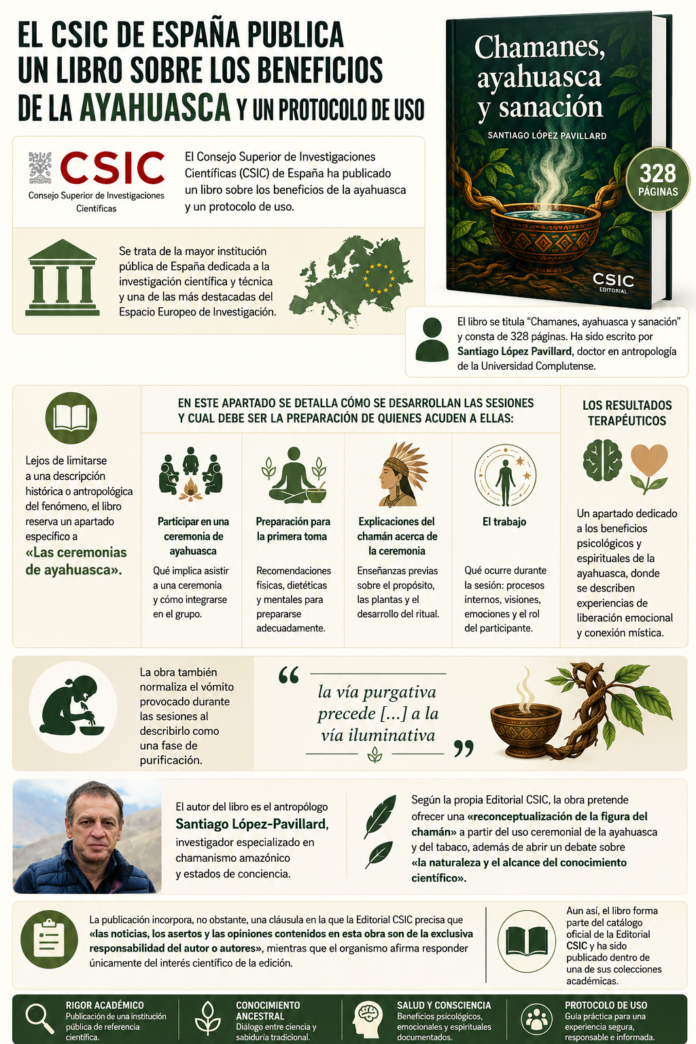
This is wonderful because it paves the way for Mexico and Guatemala to recognize ayahuasca as part of their national heritage